A Silent Alarm that Must Be Answered
Key Takeaways
- For the Tucson, AZ, Fire Department, early detection of cancer isn’t just a medical protocol; it’s a moral obligation. Annual physical examinations include cancer screenings that utilize ultrasound imaging.
- The Tucson Fire Department’s on-scene washdown protocols require all firefighters who exit the hot zone to wipe down exposed skin using department-issued cleansing wipes, and PPE is sealed in vapor-resistant bags and quarantined.
- Policy requires mandatory cleaning and replacement of soft goods in firefighting helmets, including liners, pads, chin straps and suspension systems.
When the call comes, we move with purpose. We suit up, race toward danger and face the heat head on. Our life revolves around split seconds, when instinct, discipline and courage collide.
Amid the noise and urgency of sirens, a more insidious alarm is sounding. It’s the kind that we can’t hear and, far too often, we fail to answer in time.
Cancer has become the deadliest threat in the fire service. It doesn’t announce itself with smoke or flames, trigger a dispatch or flash across our radio. It creeps in unnoticed, often striking long after the fire was extinguished and the gear was stowed. Unlike many of the dangers that we train for, this one allows no margin for delay.
As deputy chief of the Safety and Wellness Division at the Tucson, AZ, Fire Department (TFD), I’ve witnessed both the devastation that cancer leaves in its wake and the lives that were preserved through early detection. Although our profession always will carry risk, we must ask ourselves: Are we doing everything possible to protect ourselves?
The test that changed a life
One story continues to echo through the department. Just months from retirement, veteran firefighter Ron Lopez considered skipping his final annual physical. He had no symptoms or complaints and every reason to believe that he was healthy. “What difference could one more test make?” he asked. The answer was everything.
A routine ultrasound screening, which is part of the TFD’s comprehensive annual physical, revealed two early-stage cancers. Because of early detection, treatment began immediately. Surgery and follow-up care were successful. Today, Lopez isn’t battling cancer. He’s living his retirement fully, golfing under Arizona’s open skies, laughing with his family and embracing a future that nearly slipped away.
Unseen epidemic
Cancer is the leading cause of line-of-duty deaths in the fire service. The International Association of Fire Fighters reported that nearly two-thirds of firefighter deaths between 2002–2019 were cancer-related. Behind every statistic is a face, a family and a future cut short.
Our exposure is relentless. Fires release a toxic cocktail of benzene, formaldehyde, dioxins and other carcinogens. A number of the carcinogens adhere to our gear, embed in our skin and accumulate in our systems. Despite advances in PPE, we still carry these poisons home in our pores and on our uniform.
Too many firefighters continue to avoid their physical. Whether from fear, stigma or the demands of shift schedules, the result is the same: missed opportunities for early diagnosis and preventable deaths.
The TFD refuses to accept that reality.
Commitment to prevention
At the TFD, health isn’t an afterthought; it’s a condition of service. All firefighters, from the moment that they enter the pre-hire pipeline, are subject to a medical screening process that rivals those for elite athletics and military special operations. At the core of this evaluation is the uncompromising principle of early detection.
The TFD’s comprehensive physical evaluations extend significantly beyond the conventional series of tests. Utilizing the enhanced guidelines that are set forth by NFPA 1580: Standard for Emergency Responder Occupational Health and Wellness, which now incorporates the physiological requirements that are outlined in NFPA 1582: Standard on Comprehensive Occupational Medical Program for Fire Departments, each firefighter undergoes a personalized medical assessment. This evaluation includes blood draws, low-dose CT scans and cancer screenings that utilize ultrasound imaging. These methodologies are designed not only to facilitate early disease detection but also to identify dysfunction before symptoms appear. Consequently, the TFD transitioned to a proactive health strategy from a reactive one.
The annual examination is elevated to a critical ritual, reflecting the department’s unwavering commitment to safeguarding the well-being of those who courageously serve.
The unspoken truth is that cancer doesn’t discriminate between the firehouse and the fireground. It grows silently, insidiously, often long after the fire is out. At the TFD, silence no longer is an option. Every firefighter is seen, heard and screened with intention and care. Early detection isn’t just a medical protocol; it’s a moral obligation.
Turnout gear decon as SOP
Each piece of turnout gear in the TFD arsenal tells a story of lives saved, homes protected and hazards faced. That same gear, if left uncleaned, can become a toxic trap.
Understanding the insidious nature of persistent organic pollutants and carcinogenic residues that are embedded in fireground soils, the department reengineered its approach to gear care with surgical precision.
At every station, advanced extractors that are compliant with NFPA 1851: Standard on Selection, Care, and Maintenance of Protective Ensembles for Structural Fire Fighting and Proximity Fire Fighting are programmed with decontamination cycles that are optimized explicitly for the removal of particulates and chemicals. Complementing these are stackable washing systems that are designed expressly for uniforms, hoods, gloves and other soft goods, to ensure that cross-contamination is prevented at every step.
The TFD doesn’t stop at internal protocols. Twice a year, all gear is sent to an independent, third-party service provider for advanced inspection and thorough cleaning, to ensure that every seam, zipper and liner is inspected under controlled conditions.
Every cleaning is logged and monitored via the Operative IQ platform, to ensure a chain of custody, lifecycle management and audit-ready documentation.
Clean gear is more than just protocol; it’s a form of armor, protecting firefighters not only from fire but also from the slow-burning embers of occupational illness.
On-scene washdown
Cancer prevention begins not in the station, but at the scene. When the fire is knocked down, the clock starts ticking. Within this critical time window, Preliminary Exposure Reduction (PER) practices are activated. These practices aren’t optional; they are mission-critical.
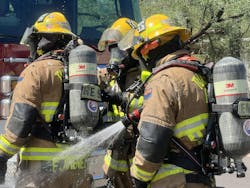
Upon exiting the hot zone, firefighters wipe down exposed skin using department-issued cleansing wipes.
PPE is doffed carefully and sealed in vapor-resistant bags to contain any off-gassing toxins. All contaminated gear is quarantined and never enters the clean cab of the apparatus.
At the station, a meticulously choreographed routine unfolds: Turnouts are cleaned in extractors, apparatus interiors are disinfected, and every member showers within the first hour, in accordance with the latest occupational hygiene guidance.
In a profession where seconds matter, the TFD extended the concept of tactical urgency to include health-protection timelines. The fight doesn’t end with the final hoseline; it continues in the quiet moments after, when prevention either begins or is forgotten. At the TFD, it never is forgotten.
Infrastructure upgrades
Brick by brick, the TFD is redesigning the future of the fire service. Each new station is a blueprint for contamination control and air quality defense, transforming what was once an operational vulnerability into a structural strength.
These new firehouses are built with zoned contamination areas: a tricolor system that’s informed by NFPA 1580 standards. The Red Zone encompasses the apparatus bay and decon areas; the Yellow Zone serves as a transition corridor for showering, changing and hand hygiene; and the Green Zone, which includes bunkrooms, kitchens and dayrooms, is kept sterile to prevent exposure.
To combat the constant threat of cancer-causing diesel particulates, the TFD installed state-of-the-art diesel exhaust extraction systems, pressurized vestibules and sealed HVAC environments. Clean air no longer is a luxury; it’s a nonnegotiable standard that’s embedded into the very architecture of firefighter safety.
No risk insignificant
Cancer doesn’t discriminate by surface area. A soot-covered helmet, though symbolic of valor, can be a vessel for carcinogenic dust and gases. The TFD understands this deeply and is acting accordingly. Recent policy expansions now include soft goods within helmets, such as liners, pads, chin straps and suspension systems, in mandatory cleaning and replacement protocols. Why? Because dermal absorption on the scalp and jawline is disproportionately high; even low-level, repeated exposure to these contaminants can create a cumulative cancer risk (see “Potential Health Effects Associated with Dermal Exposure to Occupational Chemicals,” by Stacey Anderson and B. Jean Meade, Environmental Health Insights). These helmet components, which often are overlooked, now are part of the TFD’s rotational cleaning system; they are monitored, replaced and tracked just as any other PPE component is.
Leadership = going first
It isn’t enough to advocate for change. Leaders must embody it. They must model the behaviors that they expect, create policies that hold their department accountable and implement systems that measure progress.
When the TFD observed inconsistent compliance with cancer prevention protocols, it responded not with reprimands but with policy.
The department codified expectations: required cleanings, mandatory documentation, gear-rotation schedules and minimum standards for turnout replacements. The TFD offered education, engaged its union partners and spoke directly to crews about the lives that are at stake. It made a difference. Compliance improved, participation in annual physicals increased, and firefighters began to take greater ownership of their health. Conversations about risk shifted from discomfort to urgency.
This is what leadership looks like—not perfection, but action.
Skip physical: Is it ever OK?
The answer is simple: No. Skipping your annual physical might seem harmless, but in our profession, it can be deadly. A missed screening isn’t just a personal risk; it’s a failure of duty, a threat to your family, and a blow to your crew.
We must stop treating health as an afterthought and start treating it as operational readiness. Consider this: One TFD firefighter got screened and lived. Another, who was nearly identical in years and experience, skipped multiple exams. By the time that the second firefighter’s symptoms emerged, it was too late. He died months later. The grief still reverberates through the TFD’s stations.
We can prevent this story from repeating itself, but it begins with culture, with accountability and with the courage to confront the quietest threat that we face.
A promise
A cancer screening is more than a test. It’s a promise to your loved ones, a commitment to your crew and an investment in your future.
At the TFD, we don’t see this as optional. We see it as essential, part of our duty and as sacred as the oath that we swore.
To every firefighter who is reading this: Get your screening. To every chief: Make it policy. To every city leader: Fund it. To every union representative: Champion it.
The fire might be out, but the danger isn’t. Don’t let your last alarm be a funeral bell.
Innovation Through Partnership
The Tucson, AZ, Fire Department’s commitment to cancer prevention extends beyond the department. A cancer research liaison now works in tandem with the University of Arizona, embedding front-line experience into academic inquiry and ensuring that Tucson’s firefighters aren’t just protected but also part of the future cure.
About the Author
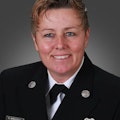 Vera Wuerfel
Vera Wuerfel
Vera L. Wuerfel is a deputy chief of the Tucson, AZ, Fire Department and has more than 30 years of experience in fire operations, training and leadership. She currently leads the department’s Safety & Wellness Division, championing firefighter health, cancer prevention and mental wellness. Wuerfel holds a Bachelor of Science in fire administration.