Johnny Gage Lives On: EMS Author Gary Ludwig Reflects on the Loss of Randolph Mantooth
Key Highlights
- Randy Mantooth played Johnny Gage on 'Emergency!', a show that revolutionized the public's understanding of EMS and firefighting.
- Mantooth was a strong advocate for first responders, frequently attending fire and EMS conferences and supporting many key initiatives even.
- The legacy he built through "Emergency!" lives on through the careers he inspired and the public awareness of emergency medical services that he helped foster.
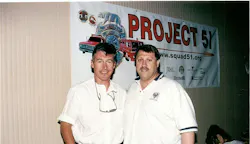
There it was. A text message waiting for me on my phone. Randolph "Randy" Mantooth had died.
The man who played Firefighter/Paramedic John "Johnny" Gage on the television series "Emergency!"
From 1972 until 1977, every Saturday night, we watched the exploits of "Johnny and Roy," with Roy DeSoto played by Kevin Tighe, as they performed medical procedures to save victims—procedures that were traditionally reserved for doctors and nurses in an emergency room. The crew from Station 51, with Squad 51 and Engine 51, would always find themselves dealing with medical emergencies, fires, rescues, hazardous materials incidents, aircraft emergencies, or even the time Johnny Gage was bitten by a rattlesnake during a car rescue.
As a 12-year-old, I was awestruck as I watched "Johnny and Roy" defibrillate patients, start IVs, push drugs, intubate patients, fight fires, perform rescues, and much more. As a future adrenaline junkie, combined with a personality that wanted to help others, that was the career for me. I wanted to be just like "Johnny." I wanted to pop those plastic tops off the epinephrine with my thumbs and watch them fly through the air right before I administered the medication. (Read to the end, and I'll tell you how popping the plastic tops on the show came about.)
Each episode emphasized teamwork between firefighters, paramedics, nurses, and doctors. Jim Page, the Father of EMS and founder of JEMS magazine, was a battalion chief with the Los Angeles County Fire Department at the time. He became the technical consultant for the show, and that was one of the things he stressed. (Some trivia for you: Robert Cinader, the creator of "Emergency!," wanted to name one of the characters after Jim Page. Jim refused, but a compromise was reached with a slight alteration to the name. So instead of "Jim Page," the character became John "Johnny" Gage.)
From actor to friend
Little did I know that the actor I idolized on television would one day become a close friend. There are many memories, including dinners, text messages, phone calls, and visits to Memphis, TN, and Champaign, IL, where I was working at the time. Of all those memories, one of my favorites is the two of us, simply sitting outside a bank of elevators in a Las Vegas hotel, having drinks, laughing, talking, and watching the parade of people. Despite his success and recognition, Randy was genuine, kind, down-to-earth, unpretentious, humble, modest, and authentic.
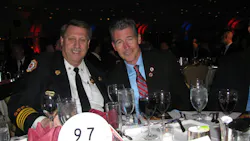
Another memory is Randy running on emergencies with me in Memphis and actually helping out at scenes. I can still see him helping a Memphis firefighter/paramedic on an interstate highway crash applying a cervical collar.
"Emergency!," through Randy, became the most influential television series ever produced about the fire service and emergency medical services. For many firefighters, EMTs, and paramedics, it was more than entertainment—it inspired careers and helped educate the public about the emerging paramedic profession. For many, "Emergency!" was more than a television show; it was the spark that ignited a lifetime of service to others.
At the time the show premiered, there were only a handful of paramedic programs in the United States, and very few communities were using fire engines as first responders on medical calls. Today, field paramedicine and fire department first response are the standard in almost every community.
From actor to EMS advocate
Randy became a lifelong advocate for firefighters and EMS professionals after the series ended. He was a constant presence at fire and EMS conferences and speaking engagements, signing autographs, taking pictures, and talking with fans. He probably heard "You're the reason I became a paramedic," or "You're the reason I joined the fire service" a million times. He knew he would hear those words countless times at every fire or EMS gathering he attended. Even when Randy was trying to enjoy dinner or grab a bite to eat, the interruptions were continual. But being the unassuming person he was, Randy would smile and simply say, "I was an actor. You're the real hero."
My heart sank when I got the text message that Randy had died, but it was not unexpected. Randy had been sick for many years. First, it was throat cancer, which he beat. Then came pancreatic cancer. I could hardly believe he eventually beat pancreatic cancer, but he did. Like many who have battled cancer, however, it eventually returned. Even during his illness, whenever he could, he still made it to fire and EMS conferences.
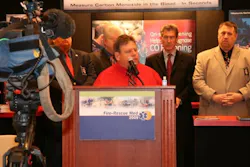
Randy had countless stories and memories from the show. One of the more interesting involved him popping the tops off epinephrine syringes. What paramedic hasn't mimicked that memorable scene from the show at some point during their career?
Randy told me that he and Tim Donnelly, who played Chet Kelly, a firefighter on Engine 51, were between takes one day. As they sat next to each other, Tim picked up a prop epinephrine syringe that was lying nearby and popped the top off toward Randy. Randy returned the favor with another prop syringe. Soon they were popping the tops at each other. Robert Cinader saw them doing it and immediately walked over. Randy and Tim thought they were in trouble. Instead, Cinader said, "Do that again."
So Randy popped another top off an epinephrine syringe with his thumb. Cinader smiled and said, "We're putting that into the next take," which happened to be a cardiac arrest scene. The rest is history. It continued throughout the series and, no doubt, is still being imitated by paramedics today.
The passing of Randolph "Randy" Mantooth marks the loss of more than a talented actor, it marks the loss of a man whose work changed lives.
Those of us in the fire and EMS service owe Randy a debt of gratitude. He helped the public understand who we are, what we do, and why our work matters. He portrayed courage, compassion, professionalism, and teamwork with authenticity and respect.
While Randy Mantooth may be gone, his legacy lives on every time a paramedic answers a call, every time a firefighter climbs aboard an engine, and every time someone chooses a career of service because they were inspired by Johnny Gage and the world of "Emergency!"
Rest in peace, Randy. Thank you for your remarkable talent, your unwavering support of first responders, and for leaving the world a little better than you found it. You will never be forgotten.
KMG365
About the Author
 Gary Ludwig
Gary Ludwig
GARY LUDWIG has served in three fire departments over his career: St. Louis, Memphis, and Champaign, IL. His fire, EMS and rescue career spanned a total of 46 years, and he has been a paramedic for over 44 years. Ludwig served as president of the International Association of Fire Chiefs in 2019-20. He has a Master’s degree in Business and Management, has written over 500 articles for professional fire and EMS publications and is the author of seven books.
Connect with Gary
Email: [email protected]
Facebook: Gary Ludwig
Twitter: @ChiefGaryLudwig
Website: garyludwig.com